Quick answer
Structural steel repair restores or strengthens existing steel members and connections that have corroded, cracked, been damaged or become inadequate for new loads. Typical work includes replacing rusted lintels, plating or sistering beams, adding posts, repairing cracked welds and retrofitting frames for seismic or wind demands, always following a licensed engineer's repair design.
Key points
Corroded lintels, beams, columns, base plates and porch or balcony steel
Reinforcement with cover plates, sister members, new posts and added bracing
Weldability checks on older steel before any new welding
Retrofits for new openings, rooftop equipment, solar arrays and added floors
Hot-work safety and fire watch in occupied buildings
Signs you may need structural steel repair
Steel problems often show up as symptoms in other materials first. Cracked brick in a stair-step pattern above a window, a window head that bulges outward, a sagging floor or a door that suddenly sticks can all point to steel underneath. By the time steel itself looks bad, the damage has usually been underway for a while.
Rust stains, flaking or bulging masonry above windows and doors, a typical sign of a corroding steel lintel
Visible rust scale, pitting or holes on beams, columns or base plates in basements, garages and crawlspaces
Cracks at welds or near bolt holes, especially at connections that see vibration or movement
Sagging or bouncy floors supported by steel beams that were altered during past renovations
Loose or wobbling porch, balcony or fire escape steel
Previous repairs with mismatched plates, field-cut holes or obvious improvised welds
Assessing corrosion, cracks and section loss
A good repair starts with an honest assessment. We expose the member when possible, remove loose rust and measure remaining thickness at the worst locations. Section loss, the percentage of steel that has rusted away, tells the engineer whether the member can be reinforced or must be replaced.
Cracks require a different approach. A crack at a weld toe or a bolt hole can grow under repeated loading, so its length and location matter. The engineer may ask for nondestructive testing, such as magnetic particle or dye penetrant inspection, to find the crack's full extent before deciding on a repair procedure.
We document findings with photos, measurements and sketches so your engineer can design the fix without guessing. When we find something unexpected, such as rotted timber bearing on a beam or a hidden splice, we stop and report it.
Reinforcing beams and columns
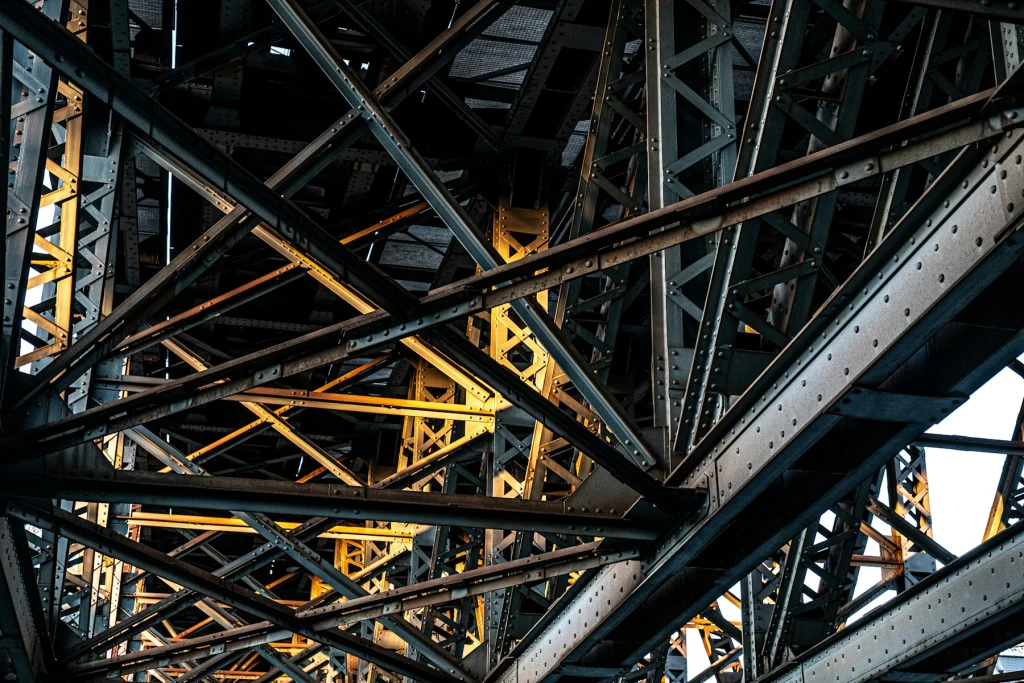
Most strengthening work uses a few proven methods. Cover plates welded or bolted to a beam flange increase its capacity and stiffness. Sister members, new beams or channels installed alongside an existing member, share the load. New posts reduce the span of an overloaded beam. Added bracing stiffens frames that rack or sway.
In occupied buildings, the method is often chosen by what is practical to install. Bolting avoids fire risk and works well where welding would be dangerous near finishes or wood. Welding may be preferred where bolt holes would weaken an already corroded member. The engineer will consider load relief, too; reinforcing a beam while it carries full load is not the same as reinforcing it while shored.
Reinforcement often happens alongside new work. A remodel that adds a heavier kitchen island or a tiled shower can push an older beam past its capacity, and a new steel frame may be part of the solution.
Welding to existing steel: know the metal first
Not all old metal welds the same way. Buildings from the late 1800s and early 1900s may contain wrought iron or early steels with chemistry that differs from modern structural steel. Cast iron columns, common in older commercial buildings, are generally not welded for structural repairs because they crack easily.
Before welding to existing steel without documentation, the engineer may request coupon testing or a chemical analysis to check weldability, often expressed through a carbon equivalent value. Higher-carbon steels may need preheat and controlled cooling to avoid cracking in the heat-affected zone. AWS D1.1 includes provisions for strengthening and repairing existing structures, and your engineer will set requirements for your situation.
Paint on older steel can also contain lead. Removing it for welding requires appropriate testing, containment and worker protection, which affects schedule and cost.
Retrofitting for new loads and new openings
Renovations frequently ask existing structure to carry more. Rooftop HVAC units, solar arrays, green roofs, added floors and heavy new finishes all add load. Cutting a new opening into a masonry wall or removing a column for an open plan redistributes it. Each of these needs an engineer's analysis and, often, new steel.
Common retrofit work includes dunnage frames to spread rooftop equipment loads across joists, new lintels and jamb posts for openings in brick walls, transfer beams when columns are removed and reinforcement of existing beams to carry new point loads. In masonry buildings we coordinate with masons so new steel and repaired brick go in together.
Seismic and wind retrofits
In earthquake-prone regions, many older buildings were built before modern seismic provisions. Retrofits typically add steel moment frames, braced frames or connections that tie floors and walls together. Across most of Texas, design earthquake demands are typically low and seismic retrofits are uncommon; far West Texas around El Paso generally carries higher seismic design values than the rest of the state, and your engineer determines whether seismic detailing applies. Along the Gulf Coast around Houston, wind is far more often the reason for a lateral retrofit.
Wind retrofits in storm-exposed regions focus on uplift and connection capacity, such as tying canopies, carports and roof structures down more securely. Any seismic or wind retrofit must be designed by a licensed engineer and permitted, and the retrofit welds are often subject to special inspection.
How a repairs & retrofits job works with Iron Frame Welding
01
Inspect and document
We expose and measure the damaged steel, photograph conditions and record section loss, cracks and connection details for the engineer.
02
Engineer's repair design
Your engineer specifies the repair or replacement, including any weldability testing, shoring, preheat or inspection requirements.
03
Shore, prepare, repair
With shoring in place as required, we clean, cut, plate, sister or replace members following the approved repair drawings and hot-work plan.
04
Protect and verify
Repaired steel is coated for its exposure, inspections are supported and the area is restored so other trades can close up.
Hot work in occupied buildings
Welding in an existing building introduces fire risk, especially near old wood framing, insulation and dust. We follow hot-work practices that typically include a site-specific hot-work permit, removal or protection of combustibles, fire extinguishers on hand and a fire watch during and after welding. Many commercial buildings and insurers have their own hot-work requirements as well.
We also plan for occupants: noise, fumes, access paths and protecting finished surfaces. Where welding is not practical, we design bolted alternatives with the engineer.
When repair is not the right answer
Sometimes replacement is cheaper and better than repair. Heavily corroded lintels, porch frames with section loss throughout and fire escapes with failed anchorage are often best removed and rebuilt. Replacement also lets you upgrade the finish to galvanized steel so the problem does not return.
We will tell you when we think a repair is throwing good money after bad. The final decision rests with you and your engineer. Exterior replacements often connect to our staircases and railings work.
Frequently asked questions
Can rusted steel lintels be repaired or must they be replaced?
Lightly rusted lintels can sometimes be cleaned and coated in place, but lintels with significant section loss or that have already cracked masonry are usually replaced. Replacement requires temporarily supporting the brick above, removing the old lintel and installing a new one, typically galvanized, with proper flashing and end bearing.
Do I need an engineer for a steel repair?
For anything that carries structural load, yes. An engineer determines whether the member can be reinforced, how much capacity is needed and what welding or bolting procedure is appropriate. Many building departments require stamped repair drawings and a permit. Minor non-structural repairs may not need engineering.
Is it safe to weld on old steel beams?
Often it is, once the steel has been identified. Old steels and wrought iron can have different chemistry from modern steel, which affects weldability. Engineers may request testing, preheat or bolted alternatives. Cast iron is generally not welded for structural repairs. Lead paint must be handled before welding as well.
How disruptive is a structural steel repair in an occupied home?
It depends on the scope. A single lintel replacement may take a day or two of exterior work. Reinforcing basement beams can involve shoring, noise and limited access to parts of the house. We plan work areas, protect finishes and schedule welding to reduce disruption, and we discuss the sequence before starting.
Can you add a new opening in a brick bearing wall?
Yes, with an engineer's design. The process usually involves temporary support, cutting the opening, installing a steel lintel or beam with proper bearing and sometimes new steel jambs or posts. Masonry repair and flashing follow. The exact approach depends on wall thickness, loads and brick condition.
What causes welds to crack on existing steel?
Common causes include fatigue from repeated loading or vibration, poor original weld quality, corrosion at the weld, hydrogen cracking from improper procedures, and overload. Identifying the cause matters, because simply welding over a crack usually fails again. The engineer will specify removal, repair and testing.